

I really like reading Alex Quigley’s words (I can feel my colleagues’ knowing-eye-rolls!). I have frequently taken opportunities to share his articles and views in our T&L Briefings and Developing Pedagogy meetings and RPCC teachers are an accommodating and patient group so I have been getting away with indulging my loyalty to the author of ‘The Confident Teacher’ for quite some time now!
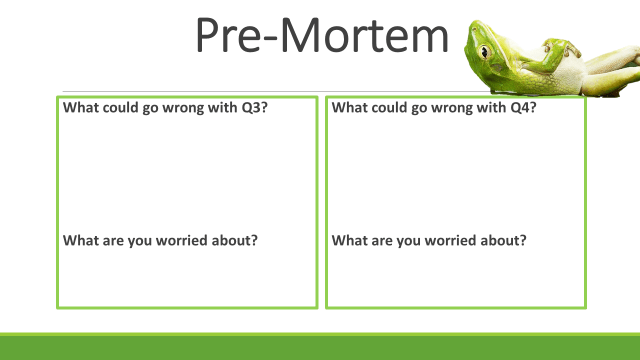
So, I was very interested to read an article in a TES publication – ‘Ruminating on Research’ wherein Alex Quigley writes; “Only by analysing what went wrong can we know if future projects will sink or swim”. He refers to a pre-mortem linked to the premise that we can anticipate why our efforts might fail in order to plan for success and most importantly for progress.
I first learned about this strategy at the PiXL conference in January and was enthusiastic about trialling it with my Year 11s and this is what I know (it is hopefully also what our Headteacher and Head of English now know and can verify as they joined my lesson on this day as part of a Curriculum Learning Walk!):
“We must quietly focus on failure if we are to do our best”
My Year 11s are a wonderfully reflective bunch! Not passive but modest enough to be open to discussions about their strengths and targets and as I have had the amazing opportunity of training them up since Year 9 I think apart from this being one of the most fulfilling and satisfying teaching experiences for me, they have learned to know each other fairly well over time and are far past the need to ridicule or berate each other for misunderstandings or low marks that they have all inevitably encountered along the way.
We have completed the GCSE course for both Language and Literature and I’m confident that I have provided them with all the skills that they need to sit these papers but…amongst the many pages of many exercise books completed and marked over the course…which targets and notes should they prioritise and do they even know how to?
What I mean here is that I am confident in their confidence in theory…but nothing can be left to chance in the final stages of their GCSE preparation.
“…focus on likely indicators of failure”
I’m a big marker – I believe in quality written feedback that is regular and personalised and I still believe (after 21 years in the game!) that my students deserve quality written feedback because if I require them to produce high quality responses in my class surely they should require me to mark and evaluate it? (I also realise that this is a very unpopular mantra in the current climate!) Anyway… I digress – in my enthusiasm to set targets and offer up advice in my students’ books I have perhaps not afforded them the time needed to react and respond to my action points and for this they need time to condense. After a bespoke lesson on condensing skills wherein the whole class audited their exercise books to select the salient points within my marking and prioritised their targets they were ready to conduct a pre-mortem!
“…anticipate why our efforts might fail”
Evaluating their likely responses to both GCSE Language Papers using a pre-mortem turned out to be a wonderfully successful exercise. As is often the case teenagers surprise us with their adaptability and ability (I suppose these are just two reasons why teaching teenagers is so brilliant) and in a seminal moment I realised that they were in fact acutely aware of and able to manage their own targets and could confidently articulate their concerns and needs. I now keenly understand what they need and as part of their honest reflection we have agreed their personalised targets:
“we can better plot our next steps and face failure with a plan”
My planning for next half term revolves entirely around their identified priorities rather than my plan for their exam preparation based broadly on my evaluation from my marking – seems obvious, I know! As for the marking: this will make things much more interesting because I will be teaching finely tuned differentiated lessons and therefore marking a range of exam questions instead of 30 carbon copies!
I recently wrote and posted about student wellbeing (‘I sing Silence As Loud As I Can’: rpccteachingandlearning.school.blog) and even though my Yr 11 students didn’t get to lie on the floor in the Drama Studio and partake in ‘mindfulness’ activities, I do think this has been their version – I took the time to consider the things that they were worried about linked to our GCSE papers and in turn, they taught me how to plan more effectively and more considerately for them.
 Regents Park Community College: Teaching & Learning